RESEARCH
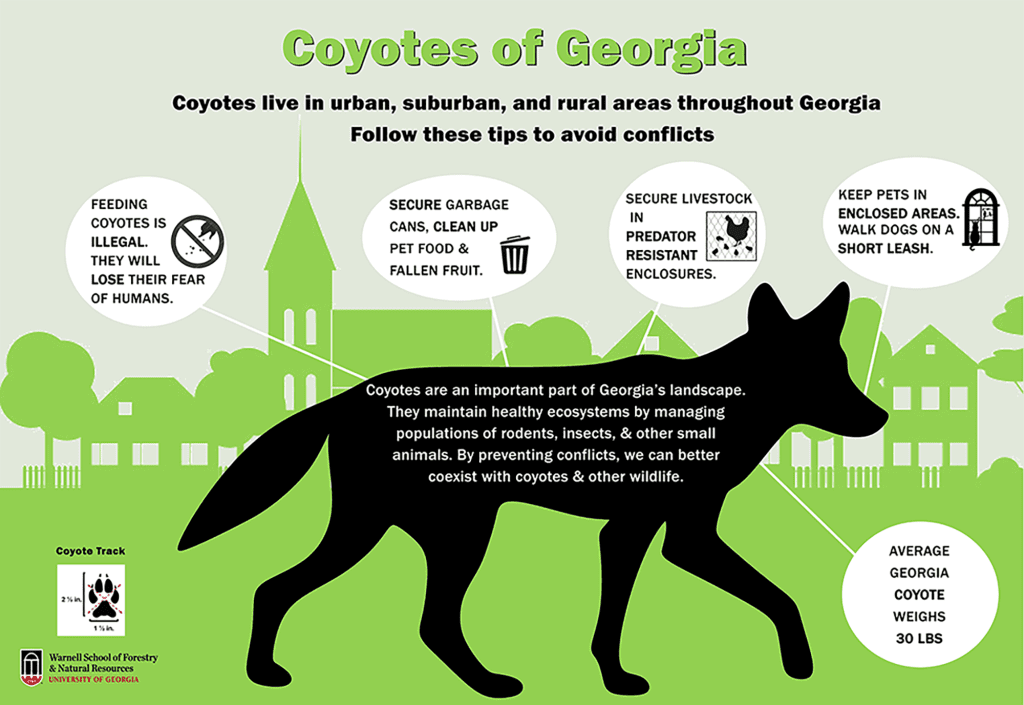
Wildlife Atlanta focuses on three areas of research and development, Wildlife Monitoring, Coyote Ecology, and Proactive Outreach, with the goal to mitigate human-wildlife conflict by predicting high-risk conflict areas and producing educational resources for Atlanta residents. As more data is collected and images and videos are reviewed, outreach materials are created with up-to-date information and statistics.
Click here for Coyote Camera Collar Footage
Wildlife Monitoring
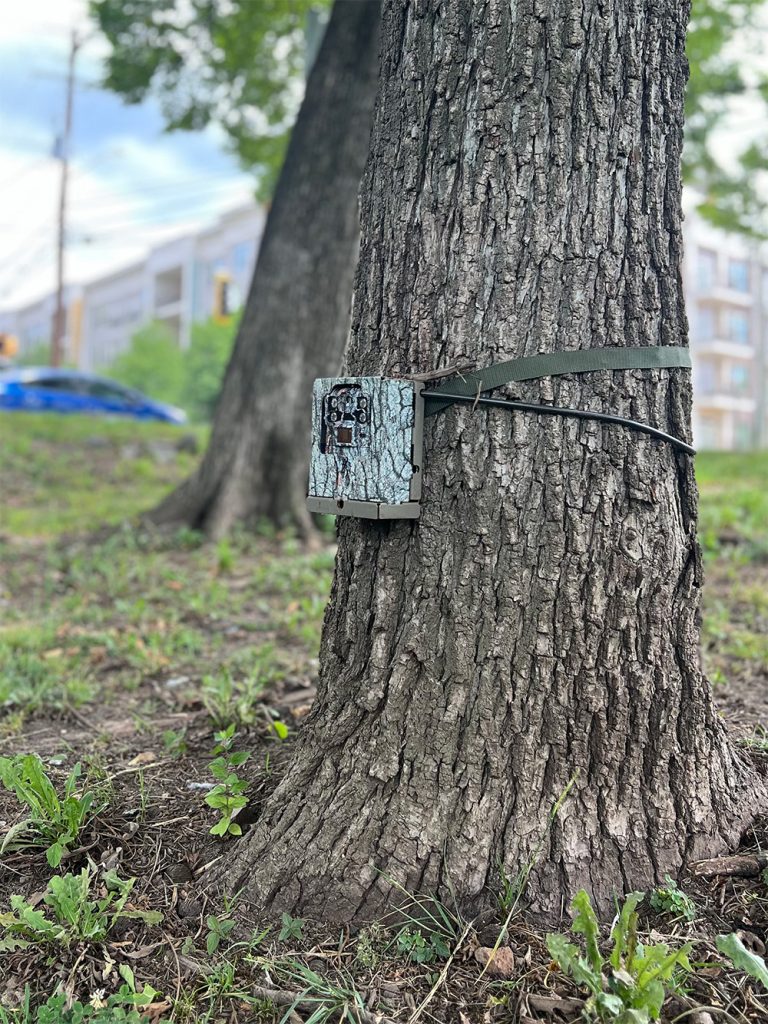
Remote, motion-sensor wildlife cameras are deployed throughout Atlanta to capture the distribution of wildlife across the landscape.
Images captured across 60 trail cameras will help us understand activity patterns, species interactions, and distribution of urban wildlife, such as coyotes, raccoons, foxes, and white-tailed deer.
View the interactive map to see what species of wildlife has been captured in your area.
COYOTE ECOLOGY
Click here for Coyote Camera Collar Footage
Wildlife Atlanta seeks to better understand urban coyote ecology in metro Atlanta in order to produce targeted outreach materials that will help mitigate negative human interactions with coyotes.
We do this by monitoring coyotes to learn more about how they live in urban areas and how they interact with other wildlife, domestic animals and humans.
To monitor coyote behavior, diet, and movement, GPS collars are put on coyotes in the Atlanta area. Some coyotes receive specialized camera collars that work similar to a Go-Pro. All coyotes are humanely captured with legal permitting and University of Georgia Animal Use Protocol Approval. All animals are released upon the completion of processing.
To date, 50 coyotes have worn GPS collars.
PROCESSING COYOTES
In addition to receiving a GPS collar, while in hand, the coyote’s overall health is evaluated. Biological samples and basic morphometric data, such as weight and total body length, are collected. Whiskers are obtained to provide information on stable isotopic signatures. These measures combined with direct observations from the collar’s camera footage give insight into the coyote’s diet.
PARTNERSHIPS
Wildlife Atlanta partners with Zoo Atlanta and the Southeastern Cooperative Wildlife Disease Study to monitor disease prevalence in Atlanta coyotes. Diseases monitored include heartworms, canine distemper, rabies, and mange. Currently no coyotes have tested positive for canine distemper or rabies.

DEN CHECKS
Each April, den checks are performed for each collared coyote.
Den sites are observed in terms of structure (burrow, tree, road culvert, etc.) and location (industrial area, green spaces, abandoned lots, etc.).
Puppies are counted with sex ratio determined and overall health checks performed.
Data collected at den checks provides insight on coyote reproductive dynamics.
PROACTIVE OUTREACH
PREDICTIVE MAPS
The GPS collars provide valuable information on coyotes such as home range size, population, behavior, movement, and interactions. By determining what landscape or human characteristics are contributing to human-wildlife conflict reporting, maps can be created that predict what type of conflicts are most likely to be reported in that area.
Targeted outreach materials can then be developed for Atlanta residents to increase their awareness of and knowledge about coyotes and other wildlife.

OUTREACH MATERIALS