
LIVING WITH WILDLIFE
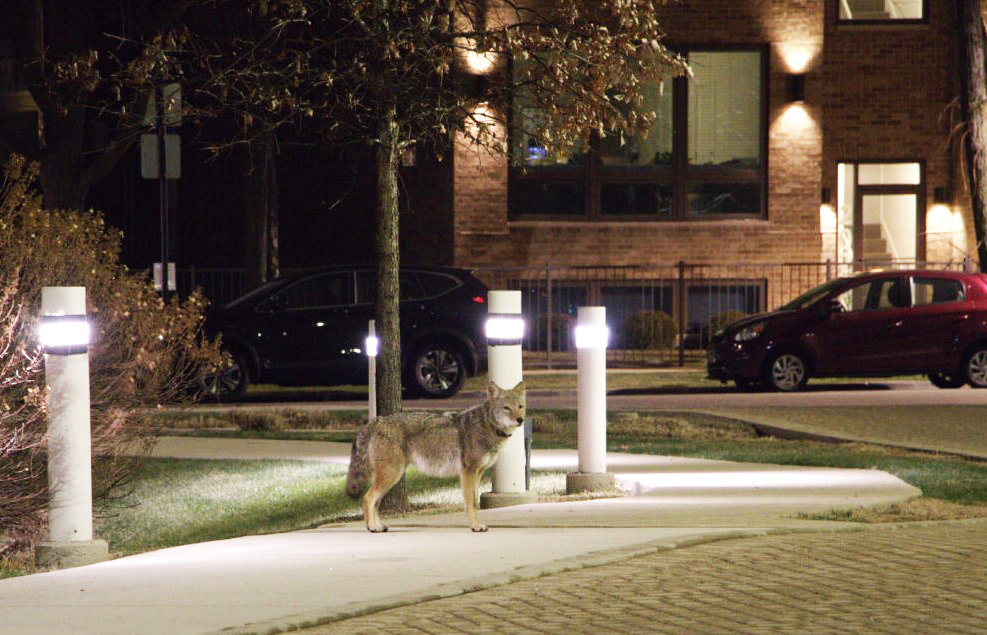
Neighborhoods can have an abundance of wildlife. Some, like songbirds or beneficial insects, are easy to welcome. But other wildlife – particularly carnivores such as coyotes – may make residents feel uneasy or scared.
There are many myths circulating about coyotes, particularly in urban environments. As wild animals, they should be respected and left alone, but it’s also good to take extra steps to help prevent human-wildlife conflicts.

PROTECT YOUR HOME & PETS
- CLOSE CRAWL SPACES
- SECURE FOOD SOURCES (Garbage Cans, Pet Food)
- KEEP YOUR PET ON A LEASH
- WALK WITH A NOISE MAKER
WHAT TO DO IF YOU SEE A COYOTE:
DO NOT APPROACH
NEVER OFFER FOOD
Offering food can associate humans with food and coyotes can lose their natural fear of humans.
USE LOUD NOISES
Bang pots and pans, blow horns or yell to "haze" a coyote out of your yard or area.
CALL A WILDLIFE PROFESSIONAL
Call a wildlife professional for assistance if the coyote seems to act erratic or aggressive.
FAQs
What do I do if i find an injured animal?
Wildlife are extremely resilient and often heal from injuries on their own. In most cases, it is best to leave them alone and not assist. Injured wildlife may be more prone to defend themselves. You should not attempt to handle injured wildlife. Rehabilitating wildlife is difficult and can only be done by people permitted through the Georgia Department of Natural Resources.
What are some deer resistant landscaping options?
UGA Extension provides a thorough review of deer-tolerant ornamental plants.
Find more information here.
What can i do if armadillos are destroying my lawn?
Armadillos can be locally controlled by trapping and associated lethal removal. Because they are often attracted to areas with their preferred diet of insects (residential lawns), deterrence is difficult; however, exclusion by fencing can be very effective.
For more information on armadillo ecology and removal, visit UGA Extension Publication.
How do I stop raccoons from getting into my garbage?
Make sure garbage is secure in a bin or shed and secure the lid with a strap or bungee cord.
You can find additional information on raccoon management in this Georgia Department of Natural Resources publication.
What should i do if there are bats in my house or attic?
DO NOT handle bats. Very few bats are positive for rabies, but the disease is fatal so anyone who has contact with a bat should seek medical advice.
The Georgia Department of Natural Resources provides a wealth of information on this topic, including removal, here.
Do wildlife carry any diseases to be concerned about?
Wildlife carry diseases and parasites that can be transmitted to domestic pets, such as dogs and cats. This is why it is important to have your pets up to date on vaccinations and to monitor them while they are outside to prevent possible contact with wildlife.
Coyotes can carry rabies just like other wildlife mammals. However, none of the coyotes captured for this project have shown signs of having rabies.
Why are there coyotes in Atlanta?
Coyotes inhabit all large metropolitan areas across the United States, including Atlanta, New York City, and Los Angeles.
Coyotes have been living close to humans for centuries, even in large Native cities before colonizers arrived. Coyotes have historically taken advantage of the niche that is available along the periphery of human civilization. They receive refuge from larger predators that are banned from human civilization, while also being able to take advantage of anthropomorphic resources, such as food waste.
While coyotes are native to the Great Plains region of the United States, coyotes have naturally expanded their range due to their generalist characteristics and reproductive capabilities.
What do coyotes eat? Do they eat domestic pets?
Based on the data collected from this project, 86% of their diet is natural food sources. This includes plant material, squirrels, and bird eggs.
Out of the near 20 weeks that the video collars were deployed, we observed 3 domestic cat predation events. However, we believe that all these individuals were feral cats because they did not have a collar. We did not observe any consumption of domestic dogs.
How do I keep coyotes away from my house and my pets safe?
To prevent coyotes from coming onto your property, it is important to remove any resources they may use.
The best way to keep your pets safe from coyotes is to always monitor them while they are outdoors. Keeping dogs on a leash and keeping cats indoors are great ways to ensure their safety.
For more information, visit Georgia Department of Natural Resources’ living with coyotes page.
Are coyotes a danger to my children?
Coyote attacks on people are extremely rare. Attacks that have occurred likely happened because the coyote lost its fear of humans due to people feeding coyotes.
A good resource on how to avoid coyote conflicts is the Urban Coyote Research Project’s website.